Trump has traded American values, interests and dignity for the false promise of Putin’s friendship
Donald Trump is likely to go down as the president who lost Russia. Not for lack of trying to make good with Moscow. In fact, it is because he has tried so hard to make it right and to pursue a personal and respectful relationship with Vladimir Putin that his ability to make any meaningful deals with Russia is doomed.

The result is an American foreign policy that is stuck with a confrontational posture and caught in a tit-for-tat policy trap preventing the pursuit of real U.S. interests with Russia. The reason is an underlying popular belief that President Trump has been incapable, at best, and, at worst, actively curried personal and political favor from Moscow over the years — regardless of what the Mueller report says or how it is interpreted.
From his 2016 campaign fumbles to his presidential summit stumbles, Trump has made an unending string of unforced errors that have caused Americans to question his motivations. That perception and reality actively limit his latitude for dealing with Russia. READ MORE
If we go to war with Iran, blame President Jimmy Carter
Jimmy Carter may be the one to blame if President Trump goes to war with Iran, thanks to his handed-down Carter Doctrine.
The 94-year old ex-president is recovering from a turkey shoot hip injury, but while he was in the White House refusing to pardon Thanksgiving turkeys, he changed the course of America’s Iran policy.
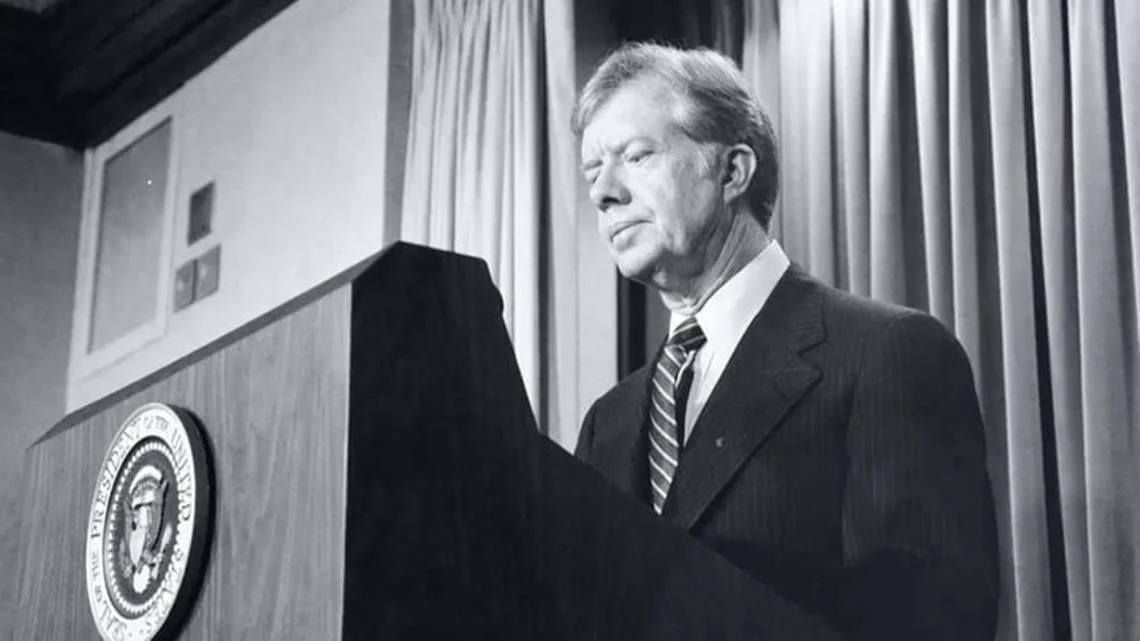
Carter asserted that any nation trying to control the Persian Gulf or restrict the free-flow of oil through the Straits of Hormuz was acting against America’s “vital interests.” Carter articulated this message near the end of his presidency and at a time when revolutionary Iran held the United States hostage and the Soviets militarily occupied Afghanistan.
The message to Iran and the USSR was clear: Make a move on the neighborhood, mess with shipping, slow the flow of oil and risk going to war with the United States. READ MORE
In Ukraine, a funny thing happened on the way to the voting booth . . .
A funny thing happened on the way to the polling booth in Ukraine. Citizens chose a comedian to be their next president. No joke.
Tired of inauthenticity and hypocrisy, exhausted by unrepresentative leadership and downright cynical about democratic process and outcomes, people are turning to those who seemingly tell-it-like-it-is for insight and leadership. Around the world and at home, voters are looking to comedians to break the cycle of undeliverable political promises.

Volodymyr Zelensky is Ukraine’s new president. A role he practiced on his popular television comedy, “Servant of the People” — a show where the 41-year old Zelensky plays an outraged teacher who is suddenly thrust into the presidency.
Art imitates life imitates art. READ MORE
Venezuelans will have to fight for their democracy. Trump can’t, and won’t, do it for them
American presidents — and all political leaders — inevitably face trade-offs between conflicting priorities. In Venezuela, President Trump is stuck between a policy rock and a preference hard place, caught between a democratic and humanitarian demand to side with the Venezuelan people and the tough reality that there is very little he can — or really wants — to do.
Trump’s declared “sovereignty doctrine” is now in direct conflict with his desired petro-policy and the reinvigoration of the Monroe Doctrine — and it is all playing out in the streets of Caracas.

The losers? Invariably the good people of Venezuela. They are victims of “President” Nicholás Maduro and his regime’s continual and cynically systemic use of food and energy resources to keep political friends and allies happy while shunting and starving his opponents. Millions have chosen to leave and live in exile as refugees, while others head to the Venezuelan streets to topple Maduro. They bear the brunt of simmering tensions and escalating violence. READ MORE
Will Guiadó's uprising save Venezuela?
This is either the beginning of a "Latin Spring" or a rerun of the Bay of Pigs crisis.
View my analysis of the dynamic events unfolding in Venezuela with CBS News anchor Tanya Rivero.

The death penalty? Kill it off, around the world
Newspaper columnist Jamal Khashoggi’s killing is the latest high-profile example of a sovereign meting out extreme justice and capital punishment. CIA analysts concluded that Khashoggi was brutally killed last October inside the Saudi Arabian consulate in Turkey.
And, shockingly, it was legal.
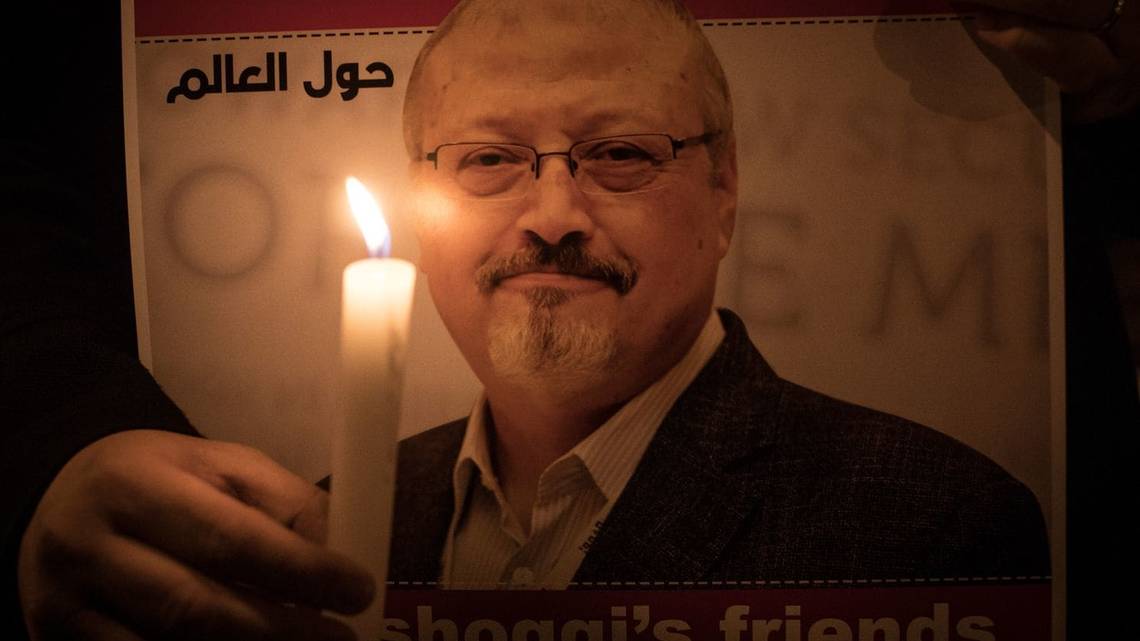
One reason the Saudis have not faced international retribution in the courts or official diplomatic blowback for the killing is simple: Death is a legal form of punishment in the Kingdom of Saudi Arabia.
Like it or not, the sentence was handed down, perhaps by Prince Mohammed bin Salman himself, and the cruel execution was conducted within the consulate and on what is arguably Saudi Arabia’s diplomatically sovereign territory. READ MORE
Trump strikes out in rejecting Cuban baseball agreement
Baseball is a colorful sport where bleacher bums spend entire games browbeating umps for making early-inning bad calls. President Trump has made a lot of bad calls during the past two years, but none is likely to incense the general public more than his decision to dump the Major League Baseball Cuban player agreement.
Well, maybe healthcare.

Unbelievably — and unceremoniously — Trump just struck out with both American and Cuban baseball fans. For Miami, it’s bad enough that the Marlins are dead last this early in the season. What’s worse is that POTUS just shut down the deal that would have brought a few more gifted, big-bat Cubans into the league. As Marlin Stadium habitués might put it: “Throw the bum out!” READ MORE
Trump’s Mar-a-Lago could be ‘Mar-a-Leako’ to our enemies
Friends and foes, foreign born and homegrown, regularly try to breach the tight security that surrounds an American president. No barrier is too big or technological hindrance too intimidating to stop concerted attempts to access the president and his data. While the risks of getting caught are huge, the rewards for success are immense.

To get the goods — whether snapping a selfie, scoring state secrets or taking a potshot — the determined go to extremes to climb fences, get across gates and search for technological backdoors. Most disturbingly, the president sometimes ushers the ill-suited or ill-meaning through the front door and into the inner sanctum.
It’s time to close the windows, lock the doors, make new keys and develop new protocols. READ MORE
Brexit has become a royal pain. Queen Elizabeth needs to step in and take a stand
Queen Elizabeth II may be the only person who can fix the Brexit mess. She has the power to wave her scepter and declare a solution. It’s a power that the royals have not exercised in years, but at 92 years old and with her nation riven, the Sovereign should step in and decide on the United Kingdom’s sovereignty.
Does she want to continue to cede some of her nation’s power to a mostly faceless European Union based in Brussels? Or should she pull up the island nation’s drawbridge, shut down its borders and add friction to the relatively free trade and capital flows that keep London’s coffers overflowing? What to do?

Dear Queen,
Here’s some advice from a mere commoner living in a former colony: If the current Brexitprocess and eventual vote do not provide a clear decision, shine up that crown, warm up your voice and take a stand. My presumptuousness ends there — I’m not going to advise you what Brexit direction you should take. That’s your burden. And your prerogative.
In fact, it is known as the “Royal Prerogative” READ MORE
Brexit: "Everything is on the table"
Hoover Institution fellow Marko Kounalakis discusses Brexit and notes everything is on the table. Kounalakis talks about what happens next, whether May's bet will payoff, and ultimately if there will be a soft Brexit.

Unprecedented, unpredictable, dynamic realtime policy shift taking place in U.K. Parliament. Bottom line: "Everything is on the table."
Go to THIS LINK, my segment begins at 12:28
Fashion forward can be backward policy
Milan fashion houses are finding that their dramatic styles and remarkable statements are looking threadbare. A recent Gucci advertisement for a blackface tunic is only the latest entry in the insensitivity sweepstakes that designers are increasingly winning.
The result is boycotts and an assault on their bottom-lines as they try to navigate the world of fashion-forward styles in a rapidly evolving and immediately reacting globalized marketplace.

At home and abroad, fashion forward can be backward policy.
Gucci’s racial gaff was not an isolated incident for first-tier fashionistas. Dolce & Gabbana made itself toxic in China when it produced an Italian voiced-over advertisement with a good-looking, ditzy Chinese model incapable of eating pizza with chopsticks. The offense continued with an Instagram anti-China rant that resulted in a widespread D&G boycott in China. READ MORE
There’s a renaissance on the African continent that the U.S. can’t afford to dismiss
Ethiopia is the latest nation where an international aviation accident is in sharp focus, but the country itself is treated merely as the hazy backdrop and tragic context for a larger geopolitical story. This one involves Boeing, China trade wars and the credibility of American regulatory institutions.
All important stories, for sure, but Ethiopia is more than the tragically fatal scene of a plane crash. With more than 100 million people, Ethiopia is the second most populous African nation after Nigeria. Landlocked Ethiopia is also the continent’s fastest growing economy with arguably its most dynamic young leader.
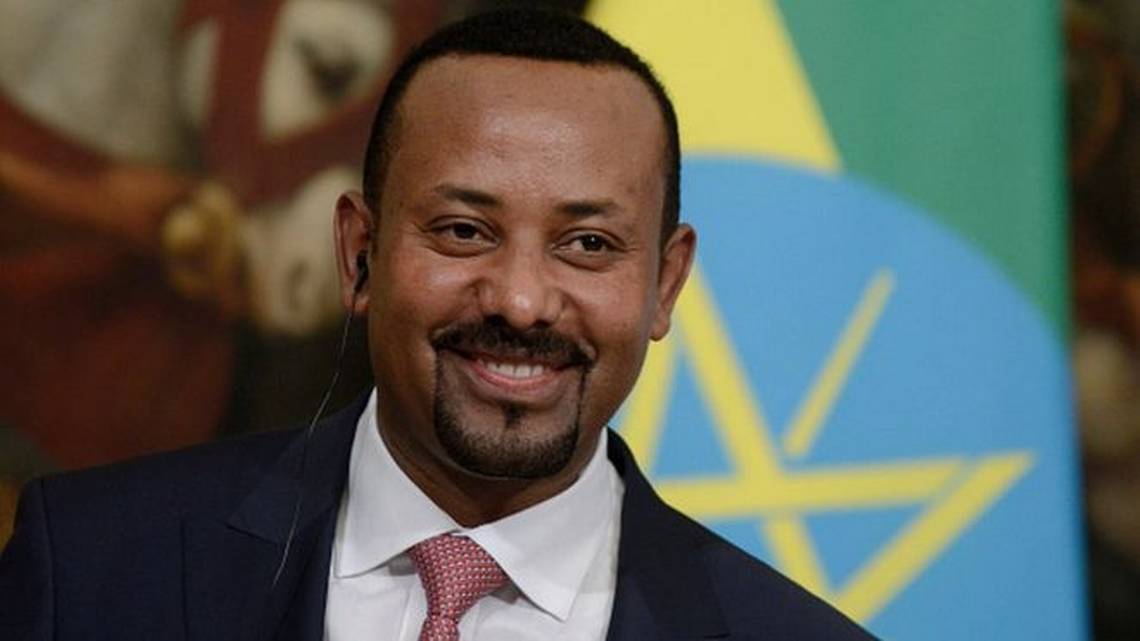
While other African countries, such as Algeria, struggle to put to pasture their near-comatose leader-for-life Abdulaziz Buteflika, Ethiopia broke the old clichéd mold of African strongman leaders who were generals or geriatrics and instead, almost a year ago, appointed a fresh and energetic reformer, the 42-year old prime minister, Abiy Ahmed. READ MORE
The tension is high in Venezuela’s standoff, but no one can afford to shoot first
Venezuela’s Interim President Juan Guaidó and questionably-elected President Nicolás Maduro are gunning for each other, but with no intention to shoot. In Hollywood, this is called a “Mexican standoff.”
Guaidó is confronting the Maduro government with an army of motivated street protesters. Maduro has deployed a largely unmotivated Venezuelan army. Both leaders currently know that they need to refrain from using violence not only to save themselves, but also their country.
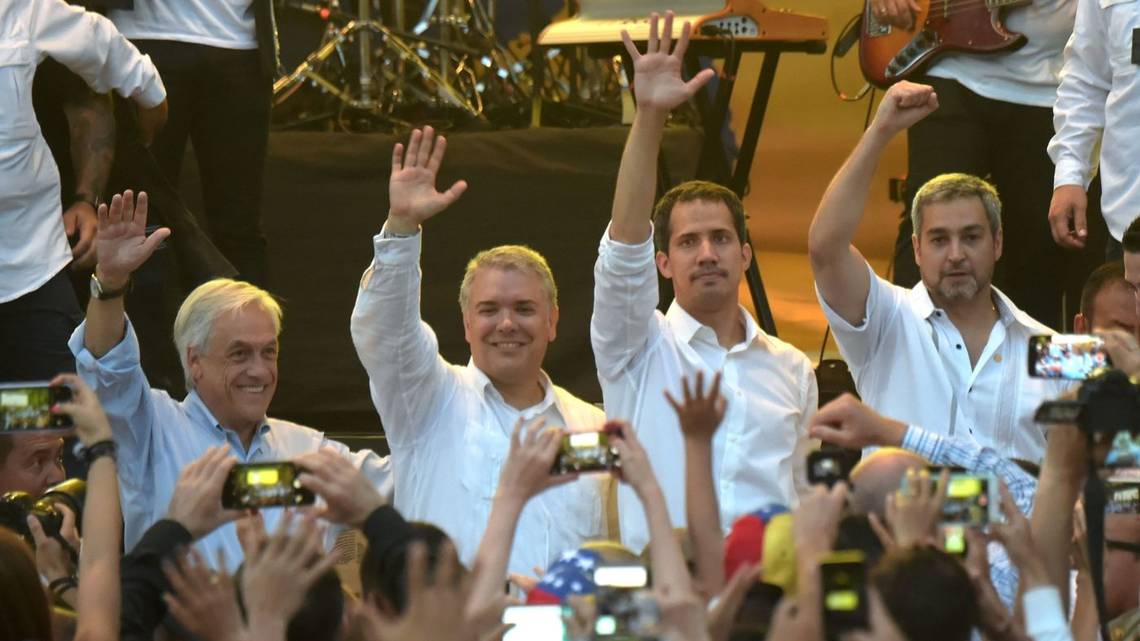
If logic and reason rule, then they will keep their powder dry, come to an accommodation, and peacefully solve the current crisis. Logic and reason, however, rarely rule in such high-stakes gamesmanship. READ MORE
Expert Markos Kounalakis: Trump improved North Korea relations

Watch this CBS News segment with Tanya Rivero on the North Korean Summit and President Trump’s moves towards peace negotiations.
President Donald Trump, global peacemaker. Really.
War is the ultimate test for nations and their leaders. History is full of great leaders who fought and won military victories, from Revolutionary War hero George Washington to Abraham Lincoln’s civil war and World War II’s FDR.
Victory is the key to greatness.
President Trump is different. If George W. Bush went into his successful 2004 re-election campaign embracing his role as a “war president,” Trump may angle to win a 2020 re-election as the nation’s “peace president.” Remarkably, if things go well, he could be Donald Trump, peacemaker.

Disquieting as it may be for those who see him as morally bankrupt, as well as a threat to democratic norms and human decency, there has to be a reckoning that he just might actually succeed in pursuing peace on multiple fronts. Trump’s campaign promises, unorthodox methods and his limitless ego are leading him to seek an end to American military engagements and — with a couple of notable exceptions — even lower the temperature elsewhere. READ MORE