CBS News Commentary with Errol Barnett

The United States, along with the U.K. and France, attacked Syrian targets in retaliation for the Assad regime's alleged use of chemical weapons last week in Douma. Markos Kounalakis, a foreign affairs columnist for McClatchy News and visiting fellow at the Hoover Institution, joins CBSN to discuss Russia's response to the airstrikes - and more. VIEW VIDEO
Journalists need to watch out for Turkey
Working as a Middle East correspondent can be hazardous to your health. Freelance journalist Austin Tice is approaching the six year mark since his kidnapping in Syria. Reporter Marie Colvin was tracked and targeted for lethal attack by the Assad regime.
Things have certainly gotten hairier for foreign reporters, but even more so for local journalists as regional tensions rise, alliances become fluid, nationalism grows, and refugee populations are on the move.

It’s not just Syria and Iraq, either. While the Trump administration weighs how further to respond to Damascus’s latest chemical weapons attack, the whole neighborhood is in flux and rules are being actively rewritten. Slowly, surely, countries once considered welcoming and safe are turning more menacing for both citizens and strangers. Turkey is the latest to flip. READ MORE
Facebook and its Global Village need a mayor to represent us
Facebook is the largest community in the world. It is also one of the least democratic institutions on earth. That’s why Facebook needs a mayor.

In non-virtual communities – meaning “IRL” (In Real Life) physical cities and states – where people interact face-to-face daily, societies have developed self-governing structures and policing institutions to serve and protect them. Private companies like Facebook, however, were not organized around democratic ideas or social justice principles. Despite the often lofty mission statements of social media companies, they are businesses put together for one reason: To make money. Oodles of it.
Thanks to the “network-effect,” unplanned, but highly profitable, communities have grown on these internet platforms to number in the billions. Greater in size than any nation-state. More politically powerful than any party or person. They cross borders and span the globe. READ MORE
Putin’s power, arrogance lead to costly Russian miscalculation that unites West
Vladimir Putin has spent years trying to divide the West by undermining elections, invading neighbors and aggressively using Russian oil and gas as a ham-handed bargaining tool. These concerted and clever efforts have suddenly, however, revealed the New Putin: Despite his best efforts and plans, he’s become a uniter, not a divider of the West.

Early 2018 had Putin heading towards a staggering, but not surprising, electoral victory against dead and disqualified opposition candidates. This dominance allowed Russia’s president to ride his eventual 76.6 percent final poll tally to a new level of cavalier confidence on the global stage. Political dominance at home and fawning support from President Trump gave him a delusional sense of invincibility. It led him to overreach and miscalculate.
Now, well over 20 Western countries have joined together to give Putin the one-finger salute for a U.K. chemical agent attack he is suspected of either directing or condoning. The targets in the assassination attempt in Salisbury were a former Russian spy, Sergei Skripal, and his daughter Yulia. READ MORE
To cash in on Kushner influence Saudis must sell their agenda to America
Foreign royalty comes to America to experience the grandeur of the nation, its natural wonders, the success of its industry, the vast complexity of its society, and, ultimately, to do a little shopping.
Saudi Arabia’s crown prince Mohammed bin Salman, known as MBS, is no different. Except he’s here to buy some very pricey weaponry, a piece of the entertainment industry, and perhaps a few personal baubles. But this is not simply a shopping trip. MBS is also here to deliver the hard-sell.

First on his list, is his desire to woo American financial centers for foreign direct investments in his development schemes, from building a new city to selling off parts of the Saudi cash-cow, the state oil company Aramco. To make his pitch credible, he needs to show that Saudi Arabia is in the midst of dramatic liberalizing reform, but also that the sweeping changes are manageable and that he’s really in charge. READ MORE
Punish Russia for Skripal poisoning, or prepare to face bolder Putin attacks
Global spy games just got a little more dangerous with the byzantine poisoning of Sergei and Yulia Skripal in the medieval-era UK city of Salisbury.
Extraterritorial assassination attempts are usually precisely targeted with the victim attacked in an unmistakable, but quiet, surgical strike. Among developed nations, there is not supposed to be any collateral damage and the attacking nation tries to maintain plausible deniability.

Police officers seal off a cul-de-sac in Salisbury, England, near to the home of former Russian ex-spy Sergei Skripal as a nerve agent is believed to have been used to critically injure him and his daughter Yulia. Britain's Home Secretary says the investigation into the nerve agent attack on a Russian ex-spy and his daughter is focusing on three sites â his home, a pub and a restaurant. Andrew Matthews AP
But the Skripal case using the Russian Novichok nerve agent just changed things.
The message to double-crossing double agents? There is no place to hide. The message to host countries harboring these defectors? Drop dead. More and more countries are witnessing targeted foreign assaults and assassinations on their soil in a wanton and reckless disregard for diplomatic norms, innocent bystanders and respect for national sovereignty. READ MORE
‘Great Firewall of China’ neuters internet dissent so Xi can rule for life
Dictators hate a challenge to their rule. That’s why China uses its vast policing and advanced technological resources both to arrest individuals and to disappear from public view any protest words, phrases, images or symbols that might be seen as threatening the state. The kinds of things that, if unchecked, can potentially overthrow a regime.
One of the high-priority targets of China’s security systems today? Winnie the Pooh.

Yes, Pooh Bear is a danger to the Chinese Communist Party, the Chinese state, and, most importantly, President Xi Jinping.
Xi should be feeling pretty confident these days, as China prepares to change its constitution to rid it of presidential term limits. Not since Chairman Mao Zedong will China have had a more powerful and unchallenged leader. But the power of Pooh must not be underestimated. READ MORE
Trump’s awful phone diplomacy boosts Russian meddling in Mexico vote
Phone calls are not President Trump’s best tool for international charm offensives. He hung up on Australia’s prime minister a year ago, nearly changed U.S. policy toward Taiwan and China in another conversation when he was president-elect, and, this week, further offended Mexico’s President Enrique Peña Nieto.
The end result of the Feb. 20 call is that Peña Nieto canceled, for a second time, a planned White House visit. It may also have locked in a win for a far-left presidential candidate in the July 1 Mexican national election — an election in which the Russians are working overtime to actively disrupt and influence.
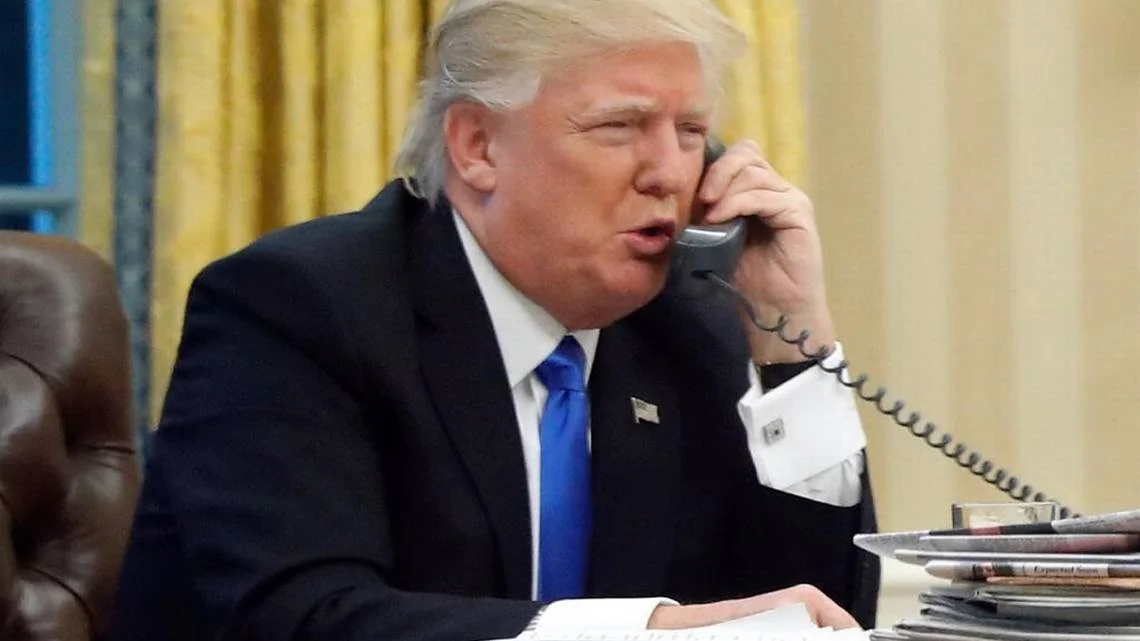
In this photo taken Jan. 28, 2017, President Donald Trump speaks on the phone with Australian Prime Minister Malcolm Turnbull in the Oval Office of the White House in Washington. Transcripts of President Donald Trump’s conversations with the leaders of Mexico and Australia in January offer new details on how the president parried with the leaders over the politics of the border wall and refugee policy, with random asides on subjects including drug abuse in New Hampshire. Alex Brandon AP
The president’s poor phone etiquette further jeopardizes the already slow progress in the NAFTA renegotiation, adds a new strain to diplomatic relations with a border neighbor, hinders cooperation in combating drug trafficking and makes immigration issues even touchier. And with every notching up of tension with Mexico, the Trump border wall becomes an even harder sell in the nation he insists must underwrite it. READ MORE
Trump’s ideal America: More Norwegians, less Norway
Donald Trump admires “winners” and his favored immigrant group, the Norwegians, are winning so much at the Winter Olympics that they are probably getting tired of hauling around medals. If the president were to take a closer look at the Scandinavian nation, however, there is little else beyond athletic success he would personally find appealing.

Pyeongchang is exposing the world to fun-loving, towheaded Norwegians killing it on snow and ice. Mostly hidden from public view is the state that helped nurture these successful young athletes. The Kingdom of Norway is a rich country that has long contradicted the American approach to social welfare. Like tripped-up skaters, its policies on Russia, guns, healthcare, international aid, refugees, trade, education, the correctional system, and fiscal responsibility are entirely out of sync with Trump.
They don’t even agree on what defines a “s---thole” country. After Trump’s infamous comments about Haiti, El Salvador and African countries, Norwegians said they weren’t interested in emigrating to the USA, suggesting American decline and Trump had turned the USA into a “s---hole”. MORE HERE
Pentagon invests in high tech, then it’s stolen. What’s the point?
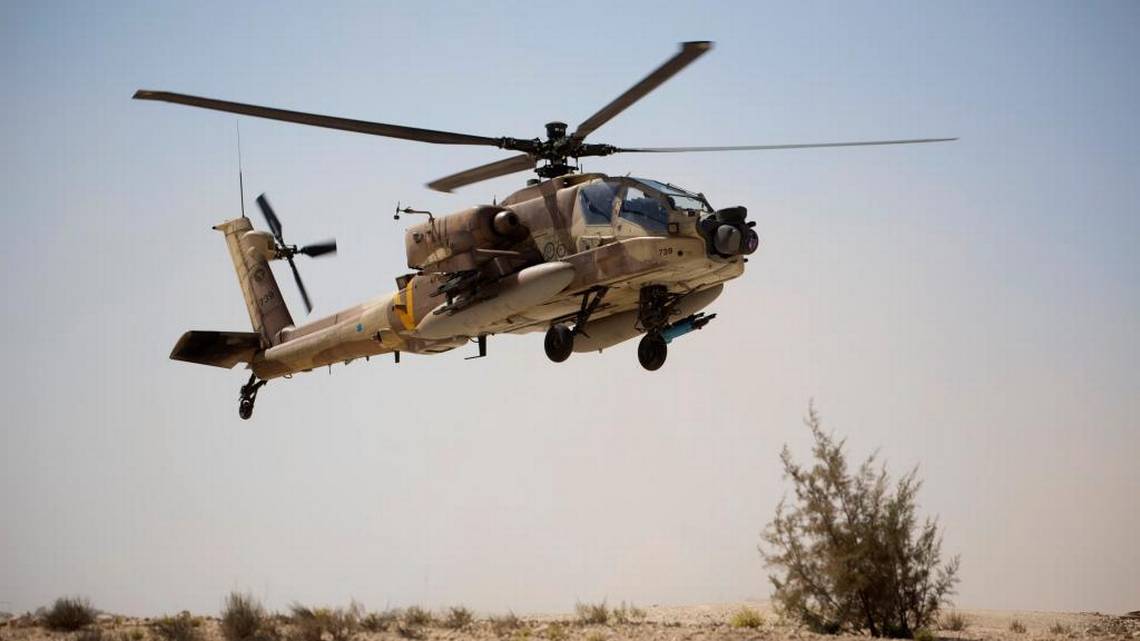
Technology born and bred in the USA has been copied and deployed by Iran against Israel. Crossing into Israeli airspace from Syria last weekend, a trespassing unmanned aerial vehicle, or UAV, aggressively swept across Israel’s border, only to be tracked and blown out of the air by one of the Israeli Defense Force’s American-made Apache helicopters.
American-made arms regularly face off against American defense doppelgangers. Design plans for U.S. drones, spacecraft, planes, ships — you name it — are all regularly targeted and frequently stolen, copied and deployed by America’s competitors and enemies.
It’s a hard reality: American intellectual property and defense technologies are highly guarded, but vulnerable because U.S. advanced military hardware is highly prized and desired by determined adversaries. In fact, they are the most desirable and successfully stolen of American secrets, whether by Iran or China. READ MORE
Tillerson nod to Venezuela coup smart, touting Monroe Doctrine not so much
Sometimes it takes an oilman to undermine an oilman. Reminiscent of J.R.’s tactics to edge out brother Bobby from the family Ewing Oil company in the fictional 80s “Dallas” TV show, America’s chief diplomat and Exxon oilman extraordinaire is upping the pressure on Venezuela’s Nicolas Maduro. One possibility? A little military coup.

In an odd geopolitical plot twist, U.S. Secretary of State Rex Tillerson seemed to almost encourage Venezuelan military officers to oust President Nicolas Maduro. Stay tuned to see what happens next week!
Venezuela has long accused the United States of conspiring to remove its defectively elected leadership, but President Barack Obama — and President George W. Bush before him — actively denied complicity in previous coup attempts. That charade is done. READ MORE
Cowering for profits: US firms in China sell out America by bending to Beijing
American technology companies operating in China had a secret weakness, one that is not so concealed anymore. Not after an apparently bad miscalculation in which Intel gave the Chinese government an incredible security advantage that the tech giant withheld from the U.S. government. Oops.

What happened? It appears Santa Clara, Calif.-based Intel recently tipped off the Chinese government about flawed computer chips’ security vulnerabilities well before letting American government and industry officials know. Whether Intel did this consciously or accidentally, the move is deeply concerning because it could have handed China a digital key to unlocking secrets and proprietary data around the world. National security may have been compromised and House Energy and Commerce Chairman Greg Walden has already called the episode "troublesome."
Even worse, Intel is not alone. READ MORE
Hostile Turkey warns U.S.-backed Kurds, aims to sideline Washington
Simmering for years, the full outbreak of hostilities between American-backed forces and President Recep Tayyip Erdogan's Turkey is now finally at a boil. Turkey, an unreliable NATO ally at best, has again made clear that the U.S. is not welcome in the neighborhood.
President Erdogan just threatened to crush the “terror army” — what he calls the American-armed and supported Kurdish troops assembling on Turkey's Syrian border — by putting the developing 30,000 Kurd anti-ISIS force directly in Ankara’s crosshairs. Erdogan promised to “strangle” this U.S.-backed force “before it’s even born.”

Turkey’s aggressive threats and active troop movements dissolve U.S. hopes for a more stabilized region and further diminish America's already waning influence in the broader Middle East. An increasingly present and embraced Russia and more regionally assertive Iran also further sideline America. The newly developing anti-American power dynamic certainly dashes any plans to “take the oil” from Iraq and Kurdistan, as candidate Donald Trump suggested in 2016. READ MORE
Global fallout from Trump's remark
JANUARY 13, 2018, 1:17 PM| There's growing backlash over President Trump's controversial immigration remark. Foreign affairs columnist for McClatchy and visiting fellow at the Hoover Institute, Markos Kounalakis, talks to CBSN about the latest developments, as well as the ongoing threat from North Korea.

Pence presidency can’t come soon enough for America’s allies
Michael Wolff’s “Fire and Fury” bestseller paints a picture of a dysfunctional Trump White House on the verge of collapse and on the edge of internal overthrow.
Figuring the odds for a 25th Amendment action is best left to bookmakers, however, not book authors. Whatever the odds, foreign leaders always need to hedge their bets. On their minds, if not their tongues, is what life would be like under a President Pence.

Traditional foreign allies look to Vice President Mike Pence and his visits for American reassurance and resolve, continuity and commitment. The veep’s outwardly quiet demeanor and unfailing Trump loyalty has earned him the right to travel the world on the president’s behalf, carrying with him the credibility of presidential access and influence. Pence’s absence from the pages of Wolff’s book will certainly endear him further to President Trump, who perceives a White House otherwise under siege by internal enemies. READ MORE