Cuba’s impact on America
HAVANA, CUBA -- Russia worked to take down Hillary Clinton in 2016, but it may have been Cuba that delivered Donald Trump the White House.
Cuba brought the world Trump? It’s hard to imagine Cuba had anything to do with the 2016 U.S. presidential election. Contemporary America seems so far away for anyone sitting on a Havana tourist rooftop overlooking renovations of its Capitol, listening to the street sounds of rhythmic music, or watching lumbering ’50s Chevys cruise down seaside boulevards.

Internationally known Cuban artist Damian Aquiles and his American wife, Pamela Ruiz, stand in front of his “Walking Men” work, which was also commissioned by the Council on Foreign Relations office in Washington, D.C. Evolving political change in Cuba is giving artists and budding entrepreneurs a glimpse at new opportunities. - Markos Kounalakis
This beautiful island nation struggles with basic goods, has no easily available internet, and could use a lot of plaster and a good paint job. The furthest thing from this news-controlled, social-media-free, communist-rundown country is the sense that it plays any geopolitical role. Read more here
The Trump World Order
Guessing what the world will look like in the Trump era is a risky game. A President Donald Trump has no governing track record, and his campaign was full of contradicting policies and statements that make only one thing certain: Unpredictability.

Surprise is an element that Trump relishes both in deal-making and, already as PEOTUS, in policy. America and the world need to get ready for a wild ride.
During the first 100 days, it is safe to expect a series of surprise moves. On the one hand, his opponents will question his presidency’s legitimacy, conflicts of interest and seeming disregard for governing institutions. On the other hand, startling shifts will also come from a White House manically pitching and tweeting new domestic and foreign policy directions. Read more.
Where will Trump venture for his first state visit?
Barbra Streisand and Lena Dunham may be some of the higher profile Trumpfugees leaving the country and heading to Justin Trudeau’s Canada. What is less certain is if a President Donald Trump will make Ottawa his first foreign port of call – a long-standing presidential and foreign policy tradition.

Mexico’s President Enrique Peña Nieto and presidential candidate Donald Trump met in Mexico City in August in a surprise visit. There are any number of early Trump supporters in other countries who could be rewarded and elevated by a presidential visit. Dario Lopez-Mills The Associated Press
Post-election, Trudeau quickly called to congratulate PEOTUS Trump on his victory and the Canadian tweeted “we agreed to meet soon to keep building the Canada-U.S. relationship.”
Trump may want to use the high-visibility first trip to do something other than affirm tradition and reflect the importance and strength of U.S.-Canadian ties. He may want to make a grand strategy statement, letting the world know that he is going to shake up the global status quo. Read more here
Instead of global news we have national cacophony
A series of dramatically extraordinary events are occurring worldwide. That’s an understatement, of course. But watching the former television staple – the network evening news programs – would leave citizens ignorant of any global tectonic shifts.

Walter Cronkite was once considered America’s “most trusted” person as he summarized the day’s most important events on the CBS Evening News.
Recently, Brazil impeached its president, Columbia arrived at a peaceful agreement (but failed referendum) to a decades-long civil war, and the Middle East became more volatile after Turkey unilaterally invaded Syria. The list goes on.
The network news on that eventful day, however, was dominated by two extreme East Coast weather events, a photo-op in Mexico, and a few viral YouTube videos. Read more here
#NeverComcast #NeverDirectTV
Voting results are in. The winners are clear.
Losers are clear, too.
What is unclear is how this diverse nation with varied, often polarized opinions and divergent factual understandings moves toward a greater, more unified and stronger future.
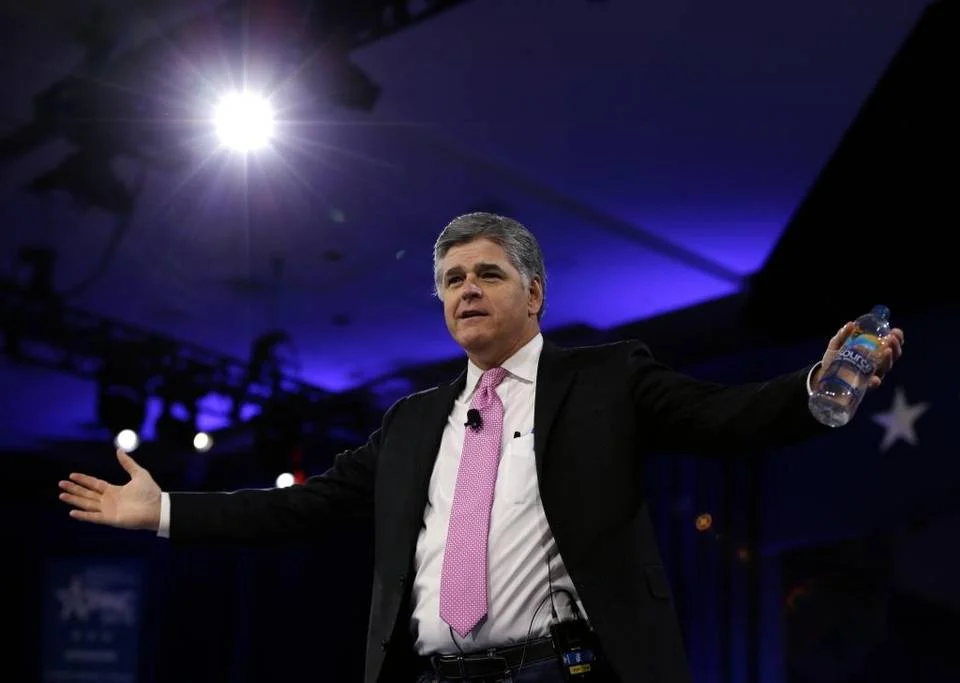
Commentator Sean Hannity did more than talk politics on Fox News; he also touted Donald Trump in a campaign video. Carolyn Kaster The Associated Press
Americans cast their ballots, but there is one vote that they now need to make against the people who failed and misled this citizenry. Donald Trump railed against them incessantly; Hillary Clinton considered them part of a vast conspiratorial plot.
“They” are the gatekeepers and party crashers. The false prognosticators and the misleading arbiters of speech, thought and norms. “They” are the ubiquitous, incessantly chattering, consistently erring and holier-than-thou television media. Read more.
Putin’s powerful playbook: Hack, steal, disrupt, mislead, confuse
Presidential debates between Donald Trump and Hillary Clinton included a third participant: Vladimir Putin, standing in the background, stealthily inserting himself in the process.

Putin hacks. Putin cyberattacks. On the one hand, the Republican nominee refused to acknowledge the cybercrime; on the other, he invited it against his opponent.
Russia’s technological capacity to damage America extends beyond the recent digital probing, snatching, culling and embarrassingly selective release of data about Democrats. The cybersecurity breaches are serious, of course, but ultimately survivable. Read more
Ethiopia’s promise, potential at a crossroads
Coffee delivers a taste of Ethiopia to Americans daily. Coffee beans were discovered in Ethiopia, and a morning Starbucks is generally as close as most Americans get to that African nation.
Ethiopia hit closer to home last week, however, when UC Davis plant biology researcher Sharon Gray was killed by rock-throwing rioters outside the nation’s capital, Addis Ababa. Gray’s car was pelted and she became the first foreigner to die in anti-government protests that have already claimed hundreds of Ethiopians since last November.

Sharon Gray, 30, a UC Davis postdoctoral researcher, was killed in Ethiopia while riding in a vehicle that was stoned by protesters in the outskirts of Ethiopia’s capital, Addis Ababa. Gray, who worked in the university’s plant biology department, was in the East African nation to attend a meeting related to her research.
In the wake of Gray’s death, Ethiopia’s domestic tensions seem to have worsened. Last Sunday, Ethiopia’s leader declared a six-month state of emergency, recognizing the growing unrest and hoping to quell further political violence. Read more
Managing nuclear proliferation – from kidnapping and murder to diplomacy and political will
Nuclear physics is a dangerous profession. It is not just the threat of accidental exposure to radioactive material that is cause for concern, it is a profession that might get you kidnapped or killed.
It might sound like the script of a James Bond or “Hitman” Agent 47 movie, where nuclear scientists or their families are abducted, extorted, held for ransom or just picked off on the street. Oddly, reality now imitates fiction in a gruesome world where nations compete for a nuclear edge and terrorists seek a path to dirty bomb development.

In this 2010 photo, Shahram Amiri, an Iranian nuclear scientist greets his son Amir Hossein as he arrives at the airport in Tehran, after returning from the United States. Amiri, who was caught up in a real-life U.S. spy mystery and later returned to his homeland, was executed under mysterious circumstances. Amiri was hanged recently. Vahid Salemi Associated Press file.
Iranian nuclear scientist Shahram Amiri is the latest victim, a conflicted defector to the West who later returned home to his Tehran family. The reunion was short-lived as he recently met an Iranian hangman, convicted of being an American spy.
Amiri, warned by the CIA, should have seen the killing coming.
Unlike Amiri, other nuclear professionals are unaware they are marked men. Read more.
Books and ideas can be the ultimate threat
Book publishers are an endangered species. Amazon.com may be the most immediate worry for anyone in the book publishing business, where fear of the internet retail giant’s power over content and distribution is pervasive. As a former publisher, I understand the economic challenges of today’s marketplace.
Global publishing industry fears, however, go beyond the mere concern surrounding profit margins and shelf placement. In Hong Kong, publishers and booksellers have a deeper, more immediate worry. They get kidnapped.

Freed bookseller Lam Wing-kee speaks to pro-democracy protesters in front of his book store in Hong Kong on June 18. He says he spent months in detention by mainland Chinese authorities for books critical of China’s Communist leadership. Kin Cheung The Associated Press
Mighty Current book publishers in Hong Kong put out juicy books that likely provoked mainland China’s leadership. Kidnapping the messenger has become an effective way to stop the presses and kill the message. Such brazen actions are a clear warning to regime critics – the Chinese state’s long arm can easily reach across borders. Read more.
Turn European youth unemployment into NATO deployment
Breaking up, it turns out, is not so hard to do. It is a simple matter of a stupid vote.
The “Brexit” result is a shock to the international financial system, a threat to post-Cold War stability and raises tensions in a region with a historically bad war habit.

Brexit dealt a new blow to European integration and collective strength, and adds pressure to a further weakened European Union already facing strategic challenges from places like Russia.
Despite Brexit’s destabilizing potential, there is one European-wide institution that promises to be a unifying European political structure. It is NATO, the North Atlantic Treaty Organization, a voluntarily built, Cold War-tested and generationally supported collective security alliance binding America to free, liberal democratic European states. Read more
In foreign affairs, Obama clears the decks, sets the stage for next president
President Barack Obama is spending his political capital, one country at a time.
Going around the world to bridge relations with former adversaries, recognize and right historical wrongs, or write new chapters in an evolving world order is seldom a president’s first-term work. It is the politically difficult work done at the end of a leader’s last term, a time when he is free of re-election concerns.

President Barack Obama hugs Shigeaki Mori, an atomic bomb survivor, during a ceremony at Hiroshima Peace Memorial Park in Hiroshima, Japan, last month. Obama became the first sitting U.S. president to visit the site of the world’s first atomic bomb attack, bringing global attention to survivors and to his unfulfilled vision of a world without nuclear weapons. (Carolyn Kaster - The Associated Press)
In the last few weeks, the president traveled to Japan and Vietnam, executing on his rebalance to Asia, a strategy that will be inherited by future presidents. But he was able to do more. Read more.
June 1st Event in Sacramento
Join me in Sacramento for a talk sponsored by the World Affairs Council and the Sacramento Bee on June 1st.

How Safe Are We?
EgyptAir Flight 804 went down this week, and experts immediately suspected an act of terrorism. Downed flights and TSA airport checks are high-visibility, regular reminders that we live in a dangerous world.
Amid the daily media noise and political hype surrounding war and terror, Americans understandably ask: “How safe are we?”

In a world of woes, it should be comforting to know we are pretty darn safe.
Perspective matters. In the United States, cars kill more people than terrorists. Bathrooms are more dangerous than airports or rock concerts. Read more.
In choosing female leaders, U.S. trails many nations
Every election brings new questions about the qualities and character of national leadership, in the United States and abroad.
In the 2008 presidential election, the big question was whether America could elect a nonwhite man – in this case, an African American – as president. Up until then, all U.S. presidents had been white Christian males of European descent.
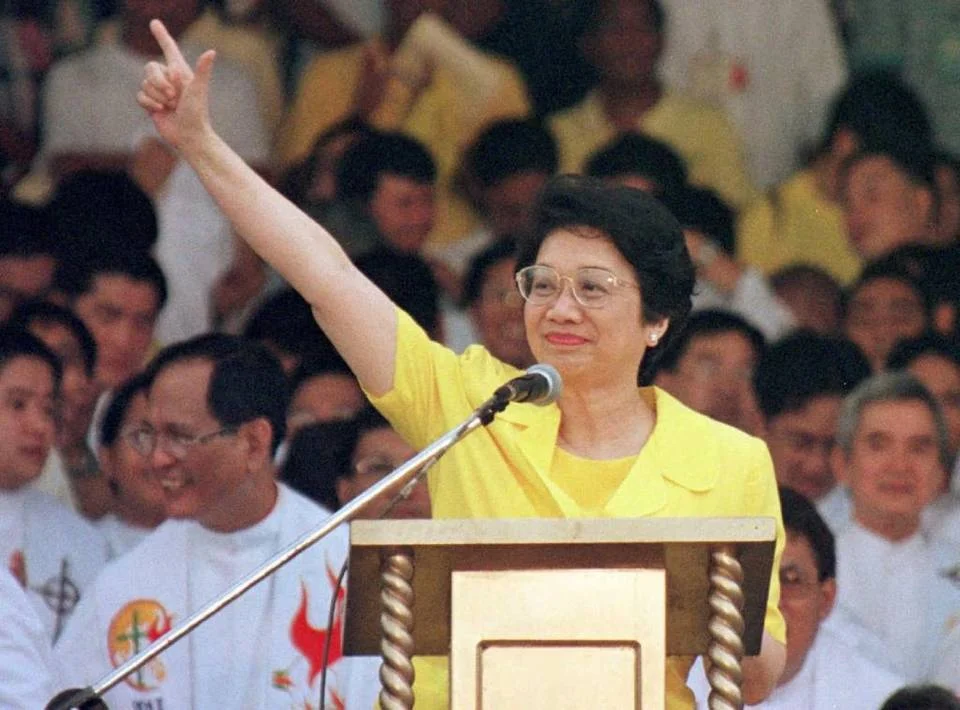
Corazon Aquino served as president of the Philippines from 1986-1992. BULLIT MARQUEZ Associated Press
But disruption was in the air. France, for example, had selected a Greco-Hungarian of Jewish ancestry as president the year before Barack Hussein Obama’s victory.
In 2016, as the country moves through its primary season, U.S. voters are considering making history in other ways. Will they elect a septuagenarian Jewish socialist, a boisterous billionaire political neophyte, a Cuban American born outside the United States? Or, after a few years of primary female also-rans, finally elect a woman to the highest office in the land? Read more
Impact of Panama Papers depends on type of government
Warren Buffett is known for his pithy sayings and homespun investment philosophy. One Buffettism states that “it takes 20 years to build a reputation and five seconds to destroy it.”
This is as true in business as it is in government. It requires less time to take down institutions and destroy public trust than it does to develop and strengthen them.

Russian President Vladimir Putin argues the Panama Papers are a foreign conspiracy aimed at toppling him and weakening Russia. Mikhail Klimentyev The Associated Press
Enter Mossack Fonseca, a Panamanian legal firm specializing in hiding offshore assets. Revelations regarding the firm’s clients and capital flows are the latest salvo on government credibility and citizen credulity.
The recently leaked 11.5 million-document dump known as the Panama Papers – a load of Mossack Fonseca’s private internal documents – is roiling the waters for a handful of leaders who wanted or needed to cache their cash.
One minute a prime minister is a respected leader, then next he is judged a shady figure in the court of public opinion. Read more.