NATO’s Myopic Accounting Ignores Maritime Superpower Greece
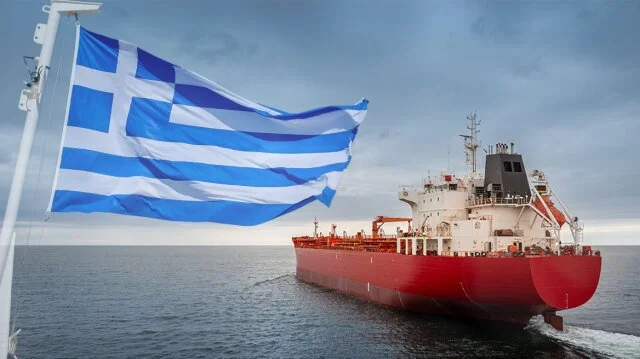
America just skipped December’s NATO foreign ministers’ meeting. That’s a first in over two decades. Part of the reason is the alliance’s irrelevance to President Donald Trump’s personalized, high-stakes peace negotiation to end the Russia-Ukraine war. Another is likely the administration’s weariness over Europe’s anemic defense spending. The alliance’s current 2 percent of GDP benchmark has long been a source of transatlantic friction. It is also a dangerously simplistic metric that measures inputs, not outputs.
The benchmark quantifies treasure, not strategic capability, and overlooks one of the most critical (and undervalued) contributions allies can make: maritime power—specifically, commercial sealift capacity. There is a solution. READ MORE
The ‘Quad’ nations, including the U.S., play a high-stakes game with China
Cricket or baseball? Can these two bat-and-ball sports, and the nations that support them, find a common language and work toward common goals — not just in sport, but in loose alliance? Four countries that are big into cricket and baseball are also working together trying to keep the world safe for democracy.

India and Australia are cricket nations. Japan and the United States are all about baseball. Together, the four nations are known as the “Quad” — “Quadrilateral Strategic Dialogue” — and they are invested in securing the Indo-Pacific region. That’s the vast swath of land and sea from the Pacific Ocean to the Indian Ocean.
At the same time that the 60-game Major League Baseball season is in playoffs, high-level Quad political representatives met face-to-masked-face in Tokyo. Their goal? Figure out how to play ball together and keep China from winning the game of global competition. READ MORE