Why Europe Needs Its Own Nuclear Deterrent
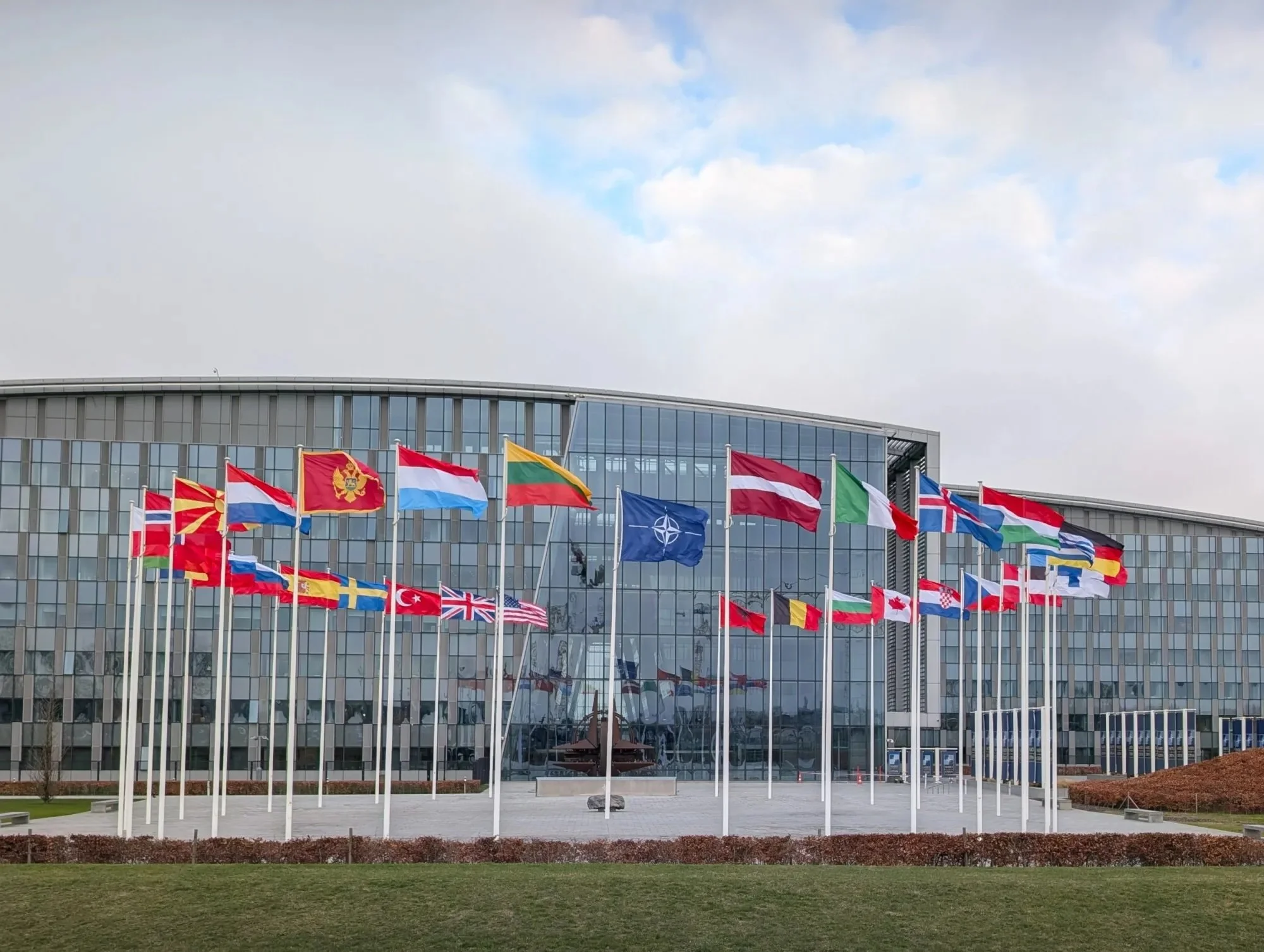
The Norwegian television series Okkupert (Occupied), also on Netflix, began with a chillingly plausible premise: a near-future Russia, with the tacit approval of the European Union, occupies Norway to seize control of its abundant North Sea oil and gas fields. (Norway, after being devastated by a hurricane attributed to global warming, elects a Green Party-ish prime minister who stops the Scandinavian country’s oil and gas production.) The drama was a meditation on sovereignty, appeasement, and the vulnerability of small nations amid resource-hungry giants. A decade ago, this was compelling fiction. Today, it reads like a prophecy laden with irony. The most explicit threat to Nordic territory comes not from Moscow’s revanchism, but from Washington’s transactionalism, with an American president coveting Greenland’s vast resources and vowing to obtain it.
Trump’s pressure to wrest this autonomous territory from Denmark underscores a terrifying truth: the foundational premise of the post-war order is dead, as Canadian Prime Minister Mark Carney eloquently made clear.) That the United States would protect the territorial integrity of its allies is no longer guaranteed. As my Hoover Institution colleague, the historian Timothy Garton-Ash, recently diagnosed our era with brutal clarity, “The West is history. Muscle up for a post-Western world of illiberal international disorder.” READ MORE
Europe: Trump v. Harris
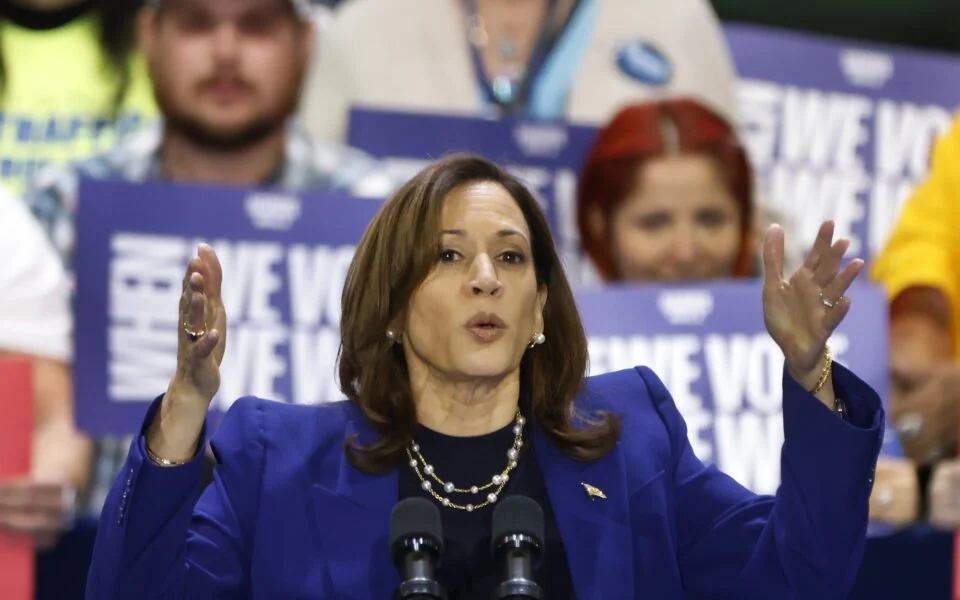
Kamala Devi Harris will be the first post-pandemic president of the United States. Unless, of course, she loses to the guy who was a failed pandemic leader.
Covid-19 changed the world. We are more digitally connected. We grew to understand how interdependent our world is and how reliant we are on Greek ships and container cargo. We learned that China could lock down and take over a remonstrating Hong Kong without firing a shot or taking much guff. Moscow made a run for Kyiv. All this between 2020 and 2022. READ MORE
Biden denounces Trump's NATO remarks, urges House GOP to pass Ukraine aid

On Tuesday, President Joe Biden called the former president’s comments regarding NATO “dangerous” and “un-American.”
“Inside the Issues” host Amrit Singh is joined by Stanford University’s Hoover Institution senior fellow Markos Kounalakis to discuss the latest Ukraine aid funding bill and Biden’s rebuke of Trump’s NATO remarks.
Meet Vladimir Putin’s Biggest Accomplice in His War on Ukraine
Belarus’s dictator, Alexander Lukashenko, has turned his country into a Russian vassal state. It didn’t have to be this way.
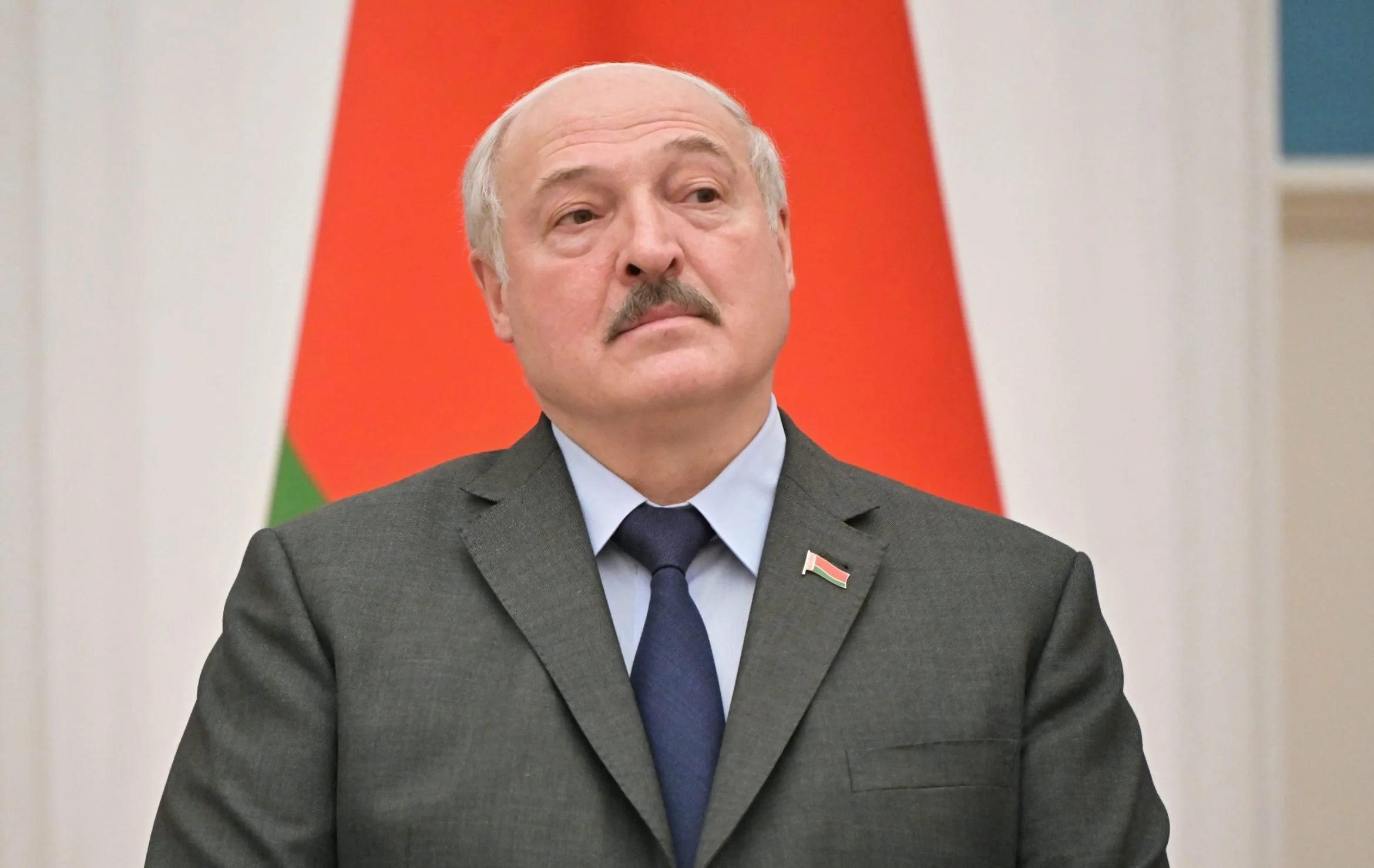
Vladimir Putin’s invasion of Ukraine is criminal on multiple counts, but some of them should be leveled at one of his main accomplices: Belarus’s dictator, Alexander Lukashenko.
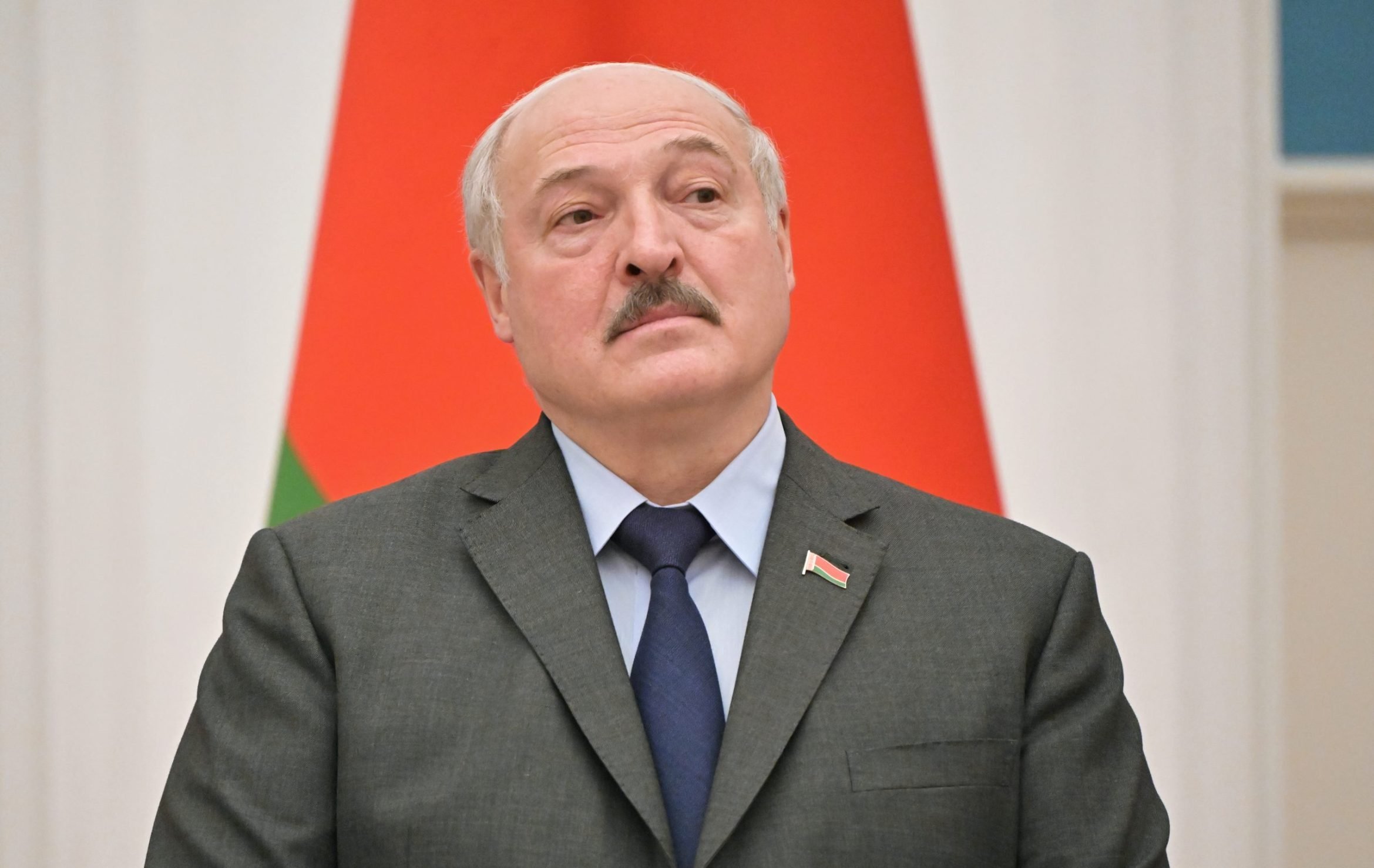
Image: Belarusian President Alexander Lukashenko speaks during a joint press conference with Russian President Vladimir Putin following their meeting, in Moscow, Russia on February 18, 2022. (Sergey Guneev / Sputnik via AP)
Russia’s military is executing an unprovoked and unprecedented attack on a peaceful neighbor on many fronts, from the air and sea. The land war, however, would not be as effective or lethal were it not for Lukashenko providing a front along Belarus’s southern border, not far from Ukraine’s capital, Kyiv.
Indeed, Ukraine President Volodymyr Zelensky put it bluntly—Belarus is “not neutral,” he said—when weighing potential negotiations in the country’s capital, Minsk. “Warsaw, Bratislava, Budapest, Istanbul, Baku—we proposed all that to the Russian side,” he said. “Any other city would work for us, too, in a country from whose territory rockets are not being fired.” Belarus is, in fact, far from neutral. It is complicit with the Russian attacks, and Zelensky has reckoned that any negotiations on its land would be on enemy territory.
Ukraine’s fate could renew a race for weapons of mass destruction
Regret is what Ukrainian leaders must be feeling these days, as Russia amasses troops along the border. There’s nothing that says “keep your hands off my territory” like fully armed, nuclear-tipped weaponry — the sort that Kyiv surrendered shortly after the Soviet Union collapsed in 1991. Now officials have no nuclear option to deter an invasion.

The international community should be careful how it lets this play out. Nations that still have access to weapons of mass destruction will draw conclusions about whether to cling to those armaments at all costs. READ MORE
Merkel, and the rest of Europe, are through with Trump
Munich.
The very name conjures vastly different images and emotions depending on your age and where you live.

For the Greatest Generation, Munich immediately evokes memories of a spineless Western “appeasement” that sold out Czechoslovakia and fed Hitler’s insatiable appetite for power leading to World War II. Baby Boomers recall Munich as a terrorism turning point when cold-blooded Black September members murdered 11 Israeli athletes in the city’s 1972 Summer Olympic Games.
This past week, Munich may likely be remembered as the place where American allies finally gave up on President Trump, America’s leadership of the alliance of Western democracies and any U.S. security guarantees as credible.
Appeasement, murder, betrayal. Munich has had its pivotal historic moments, and this looks like one of them. READ MORE
CNN Newsroom: A look at NATO & Montenegro
Kounalakis on if US should defend NATO countries: "We answered that question a long time ago"

Markos Kounalakis, Visiting Fellow at the Hoover Institution at Stanford University, discusses the uncertainty around President Trump's comments about NATO. CLICK HERE FOR VIDEO
Trump moves fast and breaks things to disrupt world
Hang out in any Silicon Valley café and the word “disruption” is sure to be uttered at a nearby table. It is the keyword to unlock funding for forward-leaning ideas and the approach toward cutting out the middle man in transactions, leaving behind the inefficiencies in mediation, and burying the slow-to-change and inertia-bound in industry. Disruption is everything and everyone wants a piece of it. Including the American people.

Disruption has hit every industry, from car transportation services to hotel lodging. 2016 brought it to foreign policy when a tried, tested and predictable former secretary of state was turned down for her star turn at the U.S. presidency in favor of a bull in the china shop disruptive agent of anti-globalist chaos and firm believer in realism’s international anarchy.
As in every case of disruptive change, there are decided winners (Uber, Airbnb) and clear losers (taxis, hotels) and a lot of people out of work and scratching their heads because they didn’t see what just hit them. READ MORE
Kanye West can help Trump recognize the Armenian genocide
Armenia is not the first thing that comes to mind when you think about Kanye West and the Kardashians. Truth is, however, Kanye has always cared and sang about justice and his wife's Armenian-American family has always felt strongly about the need to recognize one of the world's greatest crimes and injustices — the Armenian genocide.

Kanye should leverage his newfound kinship with President Trump to prod him towards doing what no other sitting American president has done: Use an executive order to declare that the murderous events of 1915 were the world’s first modern genocide.
Genocide means a single group is targeted for systematic and premeditated death and extinction. Armenian families who survived the genocide await the world’s recognition of this reprehensible event. America officially regards it as regrettable, unfortunate, and tragic, but does not recognize it as the event that spurred the word “genocide.” It is time. READ MORE
Putin’s power, arrogance lead to costly Russian miscalculation that unites West
Vladimir Putin has spent years trying to divide the West by undermining elections, invading neighbors and aggressively using Russian oil and gas as a ham-handed bargaining tool. These concerted and clever efforts have suddenly, however, revealed the New Putin: Despite his best efforts and plans, he’s become a uniter, not a divider of the West.

Early 2018 had Putin heading towards a staggering, but not surprising, electoral victory against dead and disqualified opposition candidates. This dominance allowed Russia’s president to ride his eventual 76.6 percent final poll tally to a new level of cavalier confidence on the global stage. Political dominance at home and fawning support from President Trump gave him a delusional sense of invincibility. It led him to overreach and miscalculate.
Now, well over 20 Western countries have joined together to give Putin the one-finger salute for a U.K. chemical agent attack he is suspected of either directing or condoning. The targets in the assassination attempt in Salisbury were a former Russian spy, Sergei Skripal, and his daughter Yulia. READ MORE
Hostile Turkey warns U.S.-backed Kurds, aims to sideline Washington
Simmering for years, the full outbreak of hostilities between American-backed forces and President Recep Tayyip Erdogan's Turkey is now finally at a boil. Turkey, an unreliable NATO ally at best, has again made clear that the U.S. is not welcome in the neighborhood.
President Erdogan just threatened to crush the “terror army” — what he calls the American-armed and supported Kurdish troops assembling on Turkey's Syrian border — by putting the developing 30,000 Kurd anti-ISIS force directly in Ankara’s crosshairs. Erdogan promised to “strangle” this U.S.-backed force “before it’s even born.”

Turkey’s aggressive threats and active troop movements dissolve U.S. hopes for a more stabilized region and further diminish America's already waning influence in the broader Middle East. An increasingly present and embraced Russia and more regionally assertive Iran also further sideline America. The newly developing anti-American power dynamic certainly dashes any plans to “take the oil” from Iraq and Kurdistan, as candidate Donald Trump suggested in 2016. READ MORE
Pence presidency can’t come soon enough for America’s allies
Michael Wolff’s “Fire and Fury” bestseller paints a picture of a dysfunctional Trump White House on the verge of collapse and on the edge of internal overthrow.
Figuring the odds for a 25th Amendment action is best left to bookmakers, however, not book authors. Whatever the odds, foreign leaders always need to hedge their bets. On their minds, if not their tongues, is what life would be like under a President Pence.

Traditional foreign allies look to Vice President Mike Pence and his visits for American reassurance and resolve, continuity and commitment. The veep’s outwardly quiet demeanor and unfailing Trump loyalty has earned him the right to travel the world on the president’s behalf, carrying with him the credibility of presidential access and influence. Pence’s absence from the pages of Wolff’s book will certainly endear him further to President Trump, who perceives a White House otherwise under siege by internal enemies. READ MORE