
The Tip Is the Distraction, and the Wage Is the Scandal

Gesturing, I caught the waiter’s attention to pay my restaurant bill. He hustled over and brought with him the now-ubiquitous handheld payment device. I tapped the prompts and noticed something unsettling. The suggested tip amounts—20 percent, 22 percent, 25 percent—were calculated not on the subtotal for the food and drink, but on the grand total, a number bumped by 8.625 percent state and local sales tax in San Francisco and, in the case of my burger, an additional 6 percent city-mandated health charge to help pay for restaurant workers’ health insurance.
This is a tip-on-a-tax, a surcharge on surcharges. Let me be clear: As a former waiter, I am not critical of the hardworking people who depend on tips. I once depended on them, too. I believe in tipping generously. My objection is to the software and the business decision behind it, which inflate the basis for the tip and, in turn, the swipe fees that go with it. This sleight of hand, much like shrinkflation, erodes trust by banking on the inattention we give to modern transactions. The solution is simple: point-of-sale (POS) systems should be programmed to calculate gratuities on the pre-tax subtotal. “No tips on tax” should be a principle of consumer fairness. READ MORE
As Washington Falters, California Leads the Way on Scientific Research
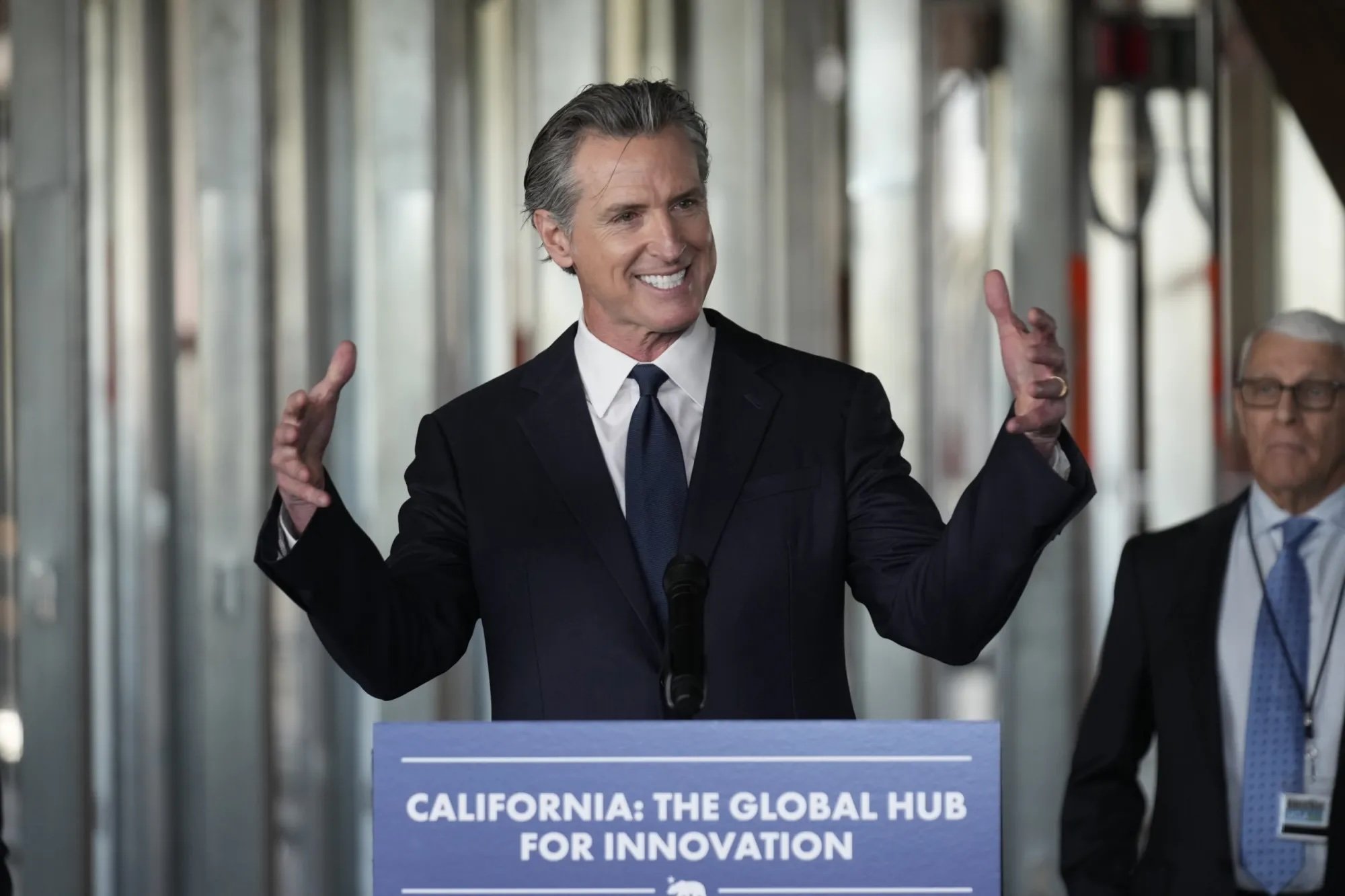
The government and its people are bound by a compact: Citizens finance their government, delegate it life-and-death powers, and expect security. This is not just a military or police matter; it also concerns protecting public health through vaccines, food inspection, and cutting-edge scientific research. In recent decades, however, Washington has frequently abdicated this core responsibility, paralyzed by ideology or incompetence, leaving a vacuum. Invariably, California steps in to fill it.
This is not a story of partisanship or the most populous state using its clout. It is pragmatic self-preservation and strategic foresight. When Washington falters, California—leveraging its economic might, its world-class institutions, and its people—acts as a de facto nation-state to safeguard its future and the rest of the nation’s, whether through auto emissions or food safety. This trend reveals a critical shift in the American federalist system, where a single state has become an essential backstop for national progress. At the time of the Republic’s founding, the population difference between the most and least populous states was 10 to 1. Now it’s over 70-to-1. READ MORE
Make California a G7 Member

Donald Trump may have personally run exclusive clubs, but America, under his presidency, is dropping its membership in global clubs left and right. His administration recently severed our ties to the World Health Organization (WHO) and the United Nations High Commissioner for Refugees (UNHCR), as well as other organizations where countries collaborate on addressing borderless challenges and opportunities. In the last week, the Trump administration has been absent from the COP 30 Climate Summit in Brazil. It has no plans to attend the upcoming G-20 meetings in South Africa, which will bring together the world’s largest economies.
In this moment, as America retrenches from global leadership, cities and states need to step up and join as many multinational organizations as will have them. Whether staying in the Paris Agreement on climate or coordinating with global health organizations to head off the spread of bird flu, measles, and AIDS, subnational actors need to fill the vacuum Washington is creating. Moving fast and breaking things has consequences. READ MORE
H-1B fee kills two birds — and America's golden goose – with one stone
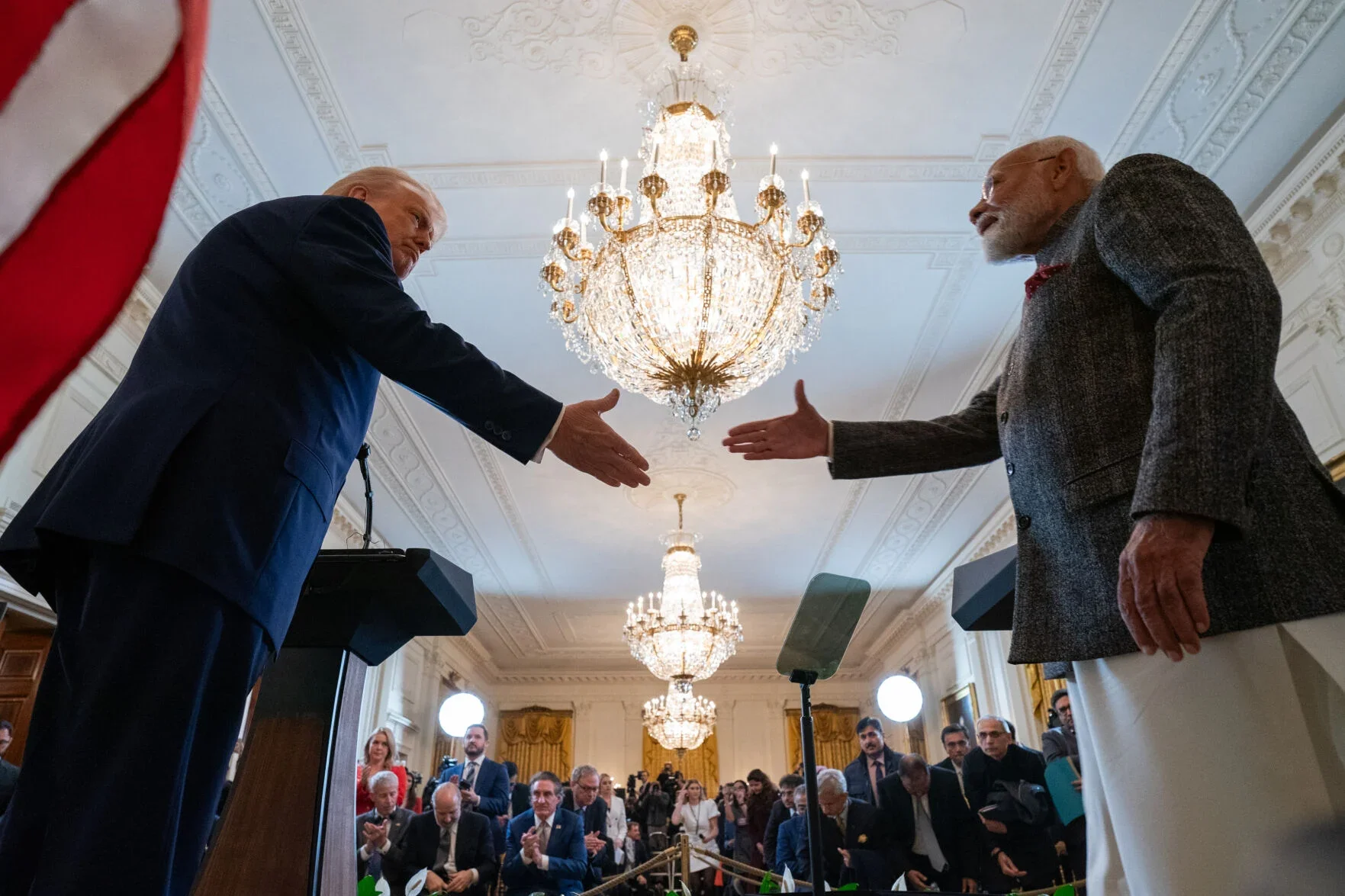
President Donald Trump has found yet another way to weaponize immigration: a $100,000 fee for new H-1B visa applicants. The policy lets POTUS kill two birds with one stone: By targeting mostly India, he also gets to punish California.
Take that, Prime Minister Narendra Modi and Gov. Gavin Newsom! To Trump, a noncompliant Modi is an irritant, and a trolling Newsom is a rival.
Most workers on H-1B visas come from India, and — unsurprisingly — the majority come to where opportunity is best: California. They are educated, trained and highly skilled employees who work in America’s fastest-growing industries in San Francisco and the Silicon Valley. READ MORE
California’s Stifled Voice on Foreign Policy

California’s technological and demographic power is unmistakable, with one notable exception: We’re underrepresented in shaping foreign policy in Congress. That is bad for us and the country because California’s Pacific perspective, born of 840 miles of coastline and a wave of immigration from across the Pacific and around the Pacific rim, is crucial. Too often, D.C. policymakers overemphasize the importance of issues in Europe and the Middle East and frequently misunderstand or underappreciate threats and opportunities in the more distant Indo-Pacific. READ MORE
The death penalty? Kill it off, around the world
Newspaper columnist Jamal Khashoggi’s killing is the latest high-profile example of a sovereign meting out extreme justice and capital punishment. CIA analysts concluded that Khashoggi was brutally killed last October inside the Saudi Arabian consulate in Turkey.
And, shockingly, it was legal.

One reason the Saudis have not faced international retribution in the courts or official diplomatic blowback for the killing is simple: Death is a legal form of punishment in the Kingdom of Saudi Arabia.
Like it or not, the sentence was handed down, perhaps by Prince Mohammed bin Salman himself, and the cruel execution was conducted within the consulate and on what is arguably Saudi Arabia’s diplomatically sovereign territory. READ MORE