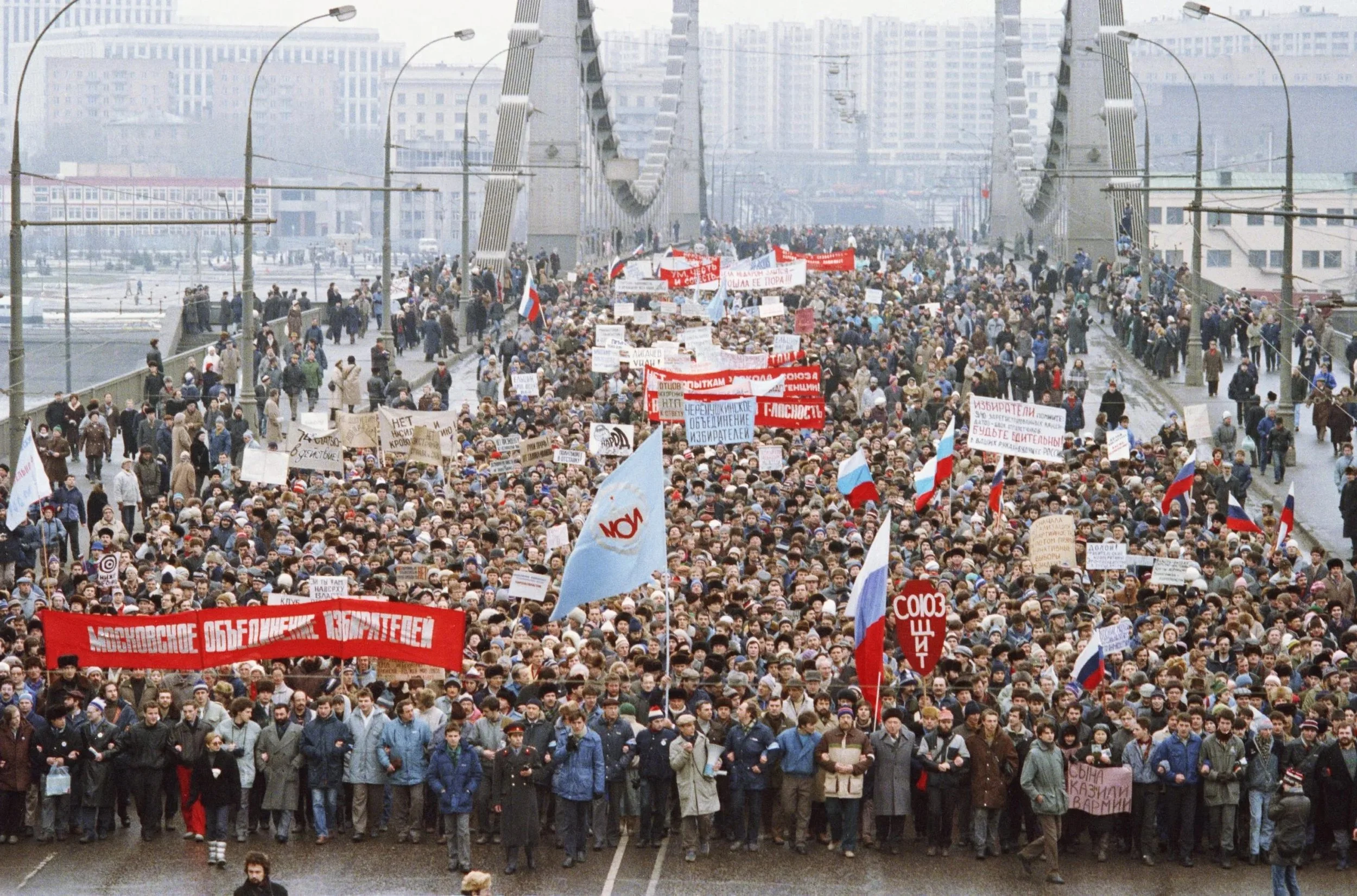
The cold was constant, but the silence felt most profound. On Christmas Day, 1991, I stood in Moscow and watched the red hammer-and-sickle flag slither down the Kremlin flagpole for the last time. The Soviet Union was no more. Reporting for NBC Radio and Mutual News, I was a witness to the end of an empire and, we thought, the birth of a new Russia. The air, thin and sharp with winter, was thick with a dizzying mix of exhilaration and dread.
On the streets, this new era was not one of simple, unified hope. It saw a raw display of societal fracture. Near Red Square, in front of the grand Detsky Mir—the “Children’s World” department store—I saw the human cost of a collapsed system embodied in a single, tragic image: a babushka, her face a mask of quiet desperation, trying to sell a single sock on the frozen pavement. Her life savings had evaporated, and the social safety net had disintegrated, leaving only her last, threadbare possessions. At the same moment, the beneficiaries of this chaos sped past in flashy cars, their newfound wealth—often derived from arbitrage between foreign currency and citizens’ despair—on opulent display as they headed to private restaurants and casinos. This was the messy, brutal dawn of Yeltsin’s Russia: a society of explosive potential and predatory opportunism. READ MORE